Scottsdale, Arizona
Water Damage Restoration in Scottsdale, AZ
Here is what to do first when water gets into your home, and how water damage restoration in Scottsdale works.
If water is still running, shut off the main valve first.
Water damage in your home? What to do in the first 10 minutes
Stop the water at the main shut-off valve first. Then stay clear of wet outlets, take photos, move your things and call.
- 01
Shut off the water
Turn off the main shut-off valve for the house. If the leak is at the meter or in the street, Scottsdale Water customers can call the City at 480-312-5650.
- 02
Stay safe around power
Do not touch outlets, cords or appliances that sit in water. Turn off power to wet rooms only if you can reach the breaker without standing in water.
- 03
Take photos and video
Photograph the water, the source and anything damaged before you move it. These pictures help when you talk to your insurer.
- 04
Move your things to a dry spot
Lift rugs, electronics, papers and small furniture out of the water. Put them in a dry room.
- 05
Call for help
Call for help with water damage in Scottsdale. The sooner drying starts, the better.
Emergency water removal and water extraction
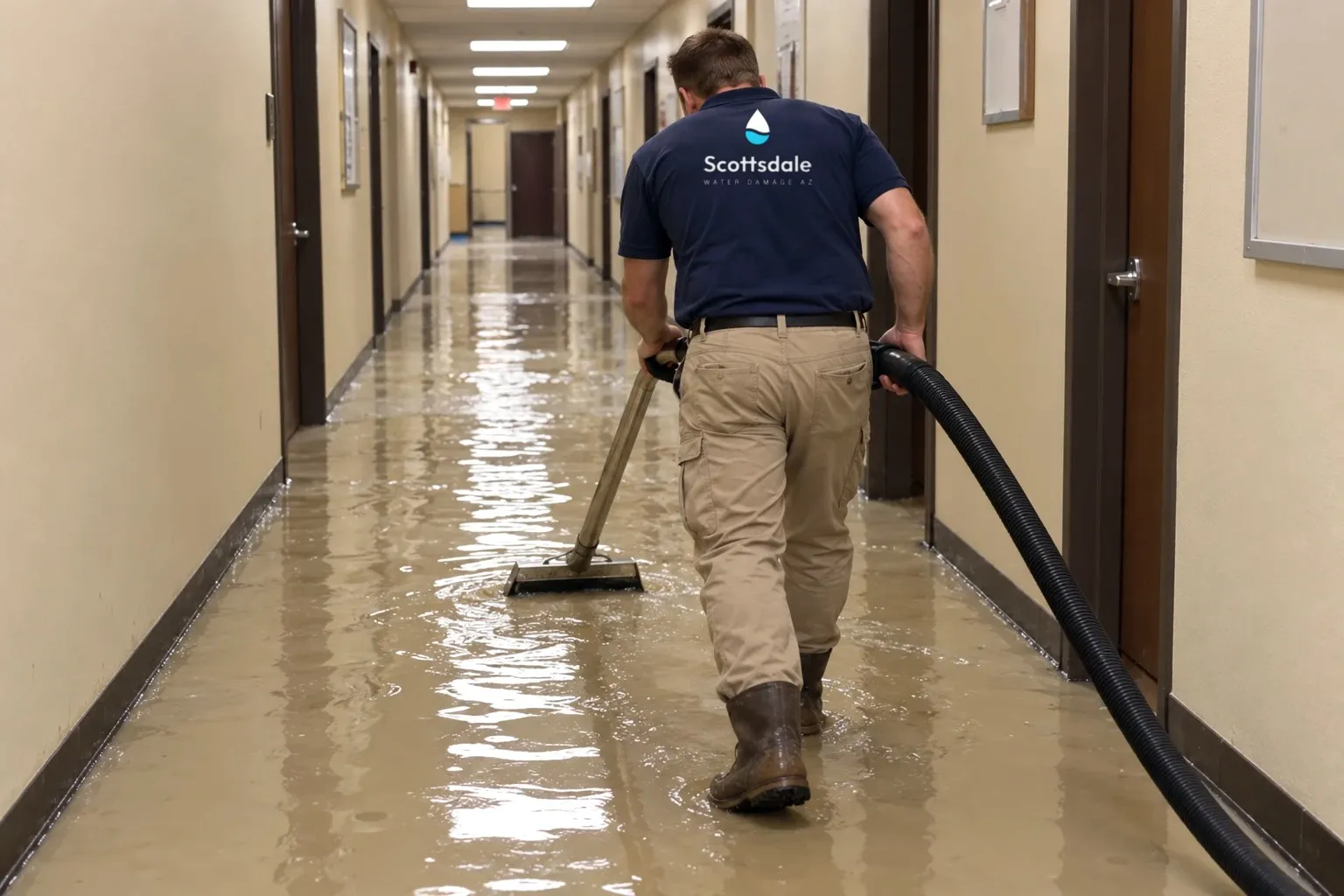
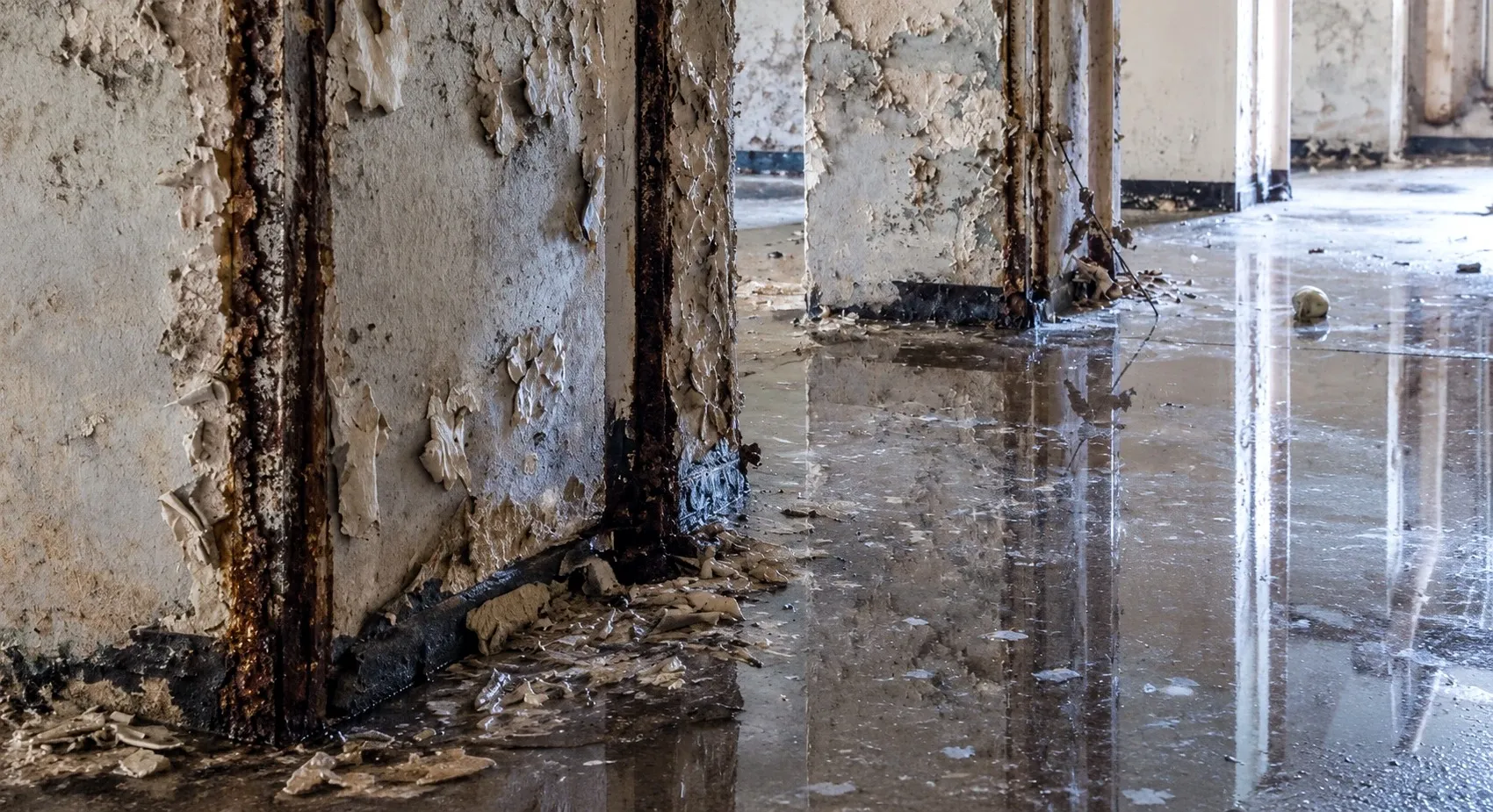
Standing water comes out first, with pumps and extractors (strong wet vacuums). Then drying starts: the EPA says to dry water-damaged areas and items within 24 to 48 hours to prevent mold growth.
Why drying cannot wait
The EPA says the key to mold control is moisture control. Read how fast mold grows after water damage.
Water out, then dry
Pumps and extractors pull the standing water out. Fans and dehumidifiers then dry what the water soaked into.
Mitigation or restoration
Water mitigation means stopping the water and drying the house. Restoration means repairing and rebuilding what got damaged.
The water you cannot see
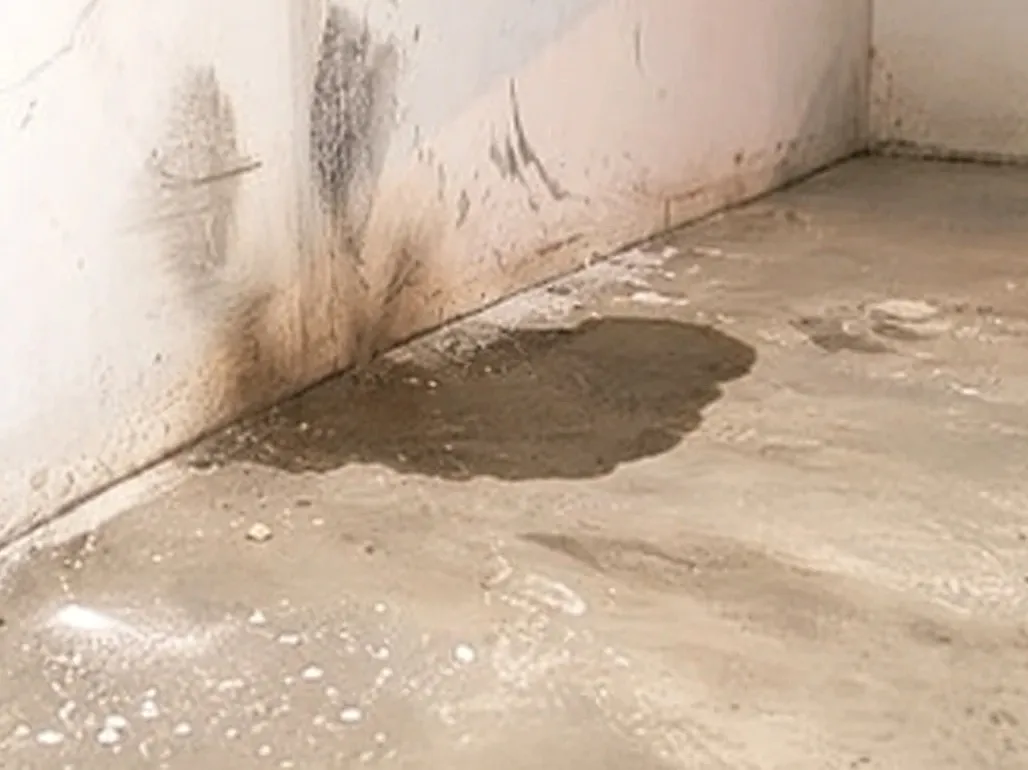
Water runs under flooring and into walls, where it can stay wet for a long time. If mold grows there, removing it is called mold remediation.
What does water damage restoration include?
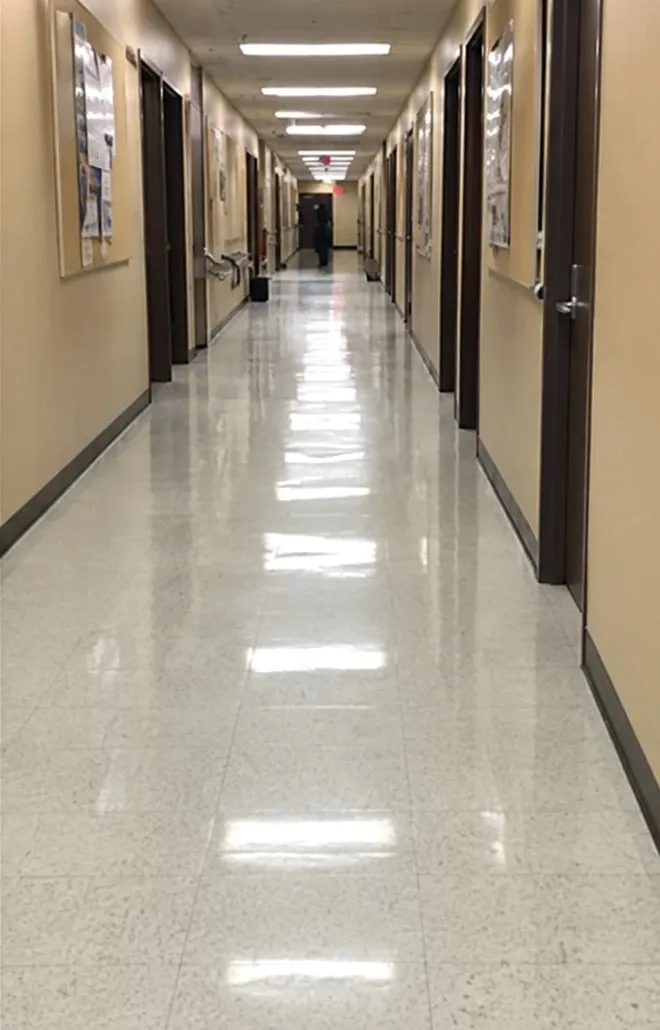
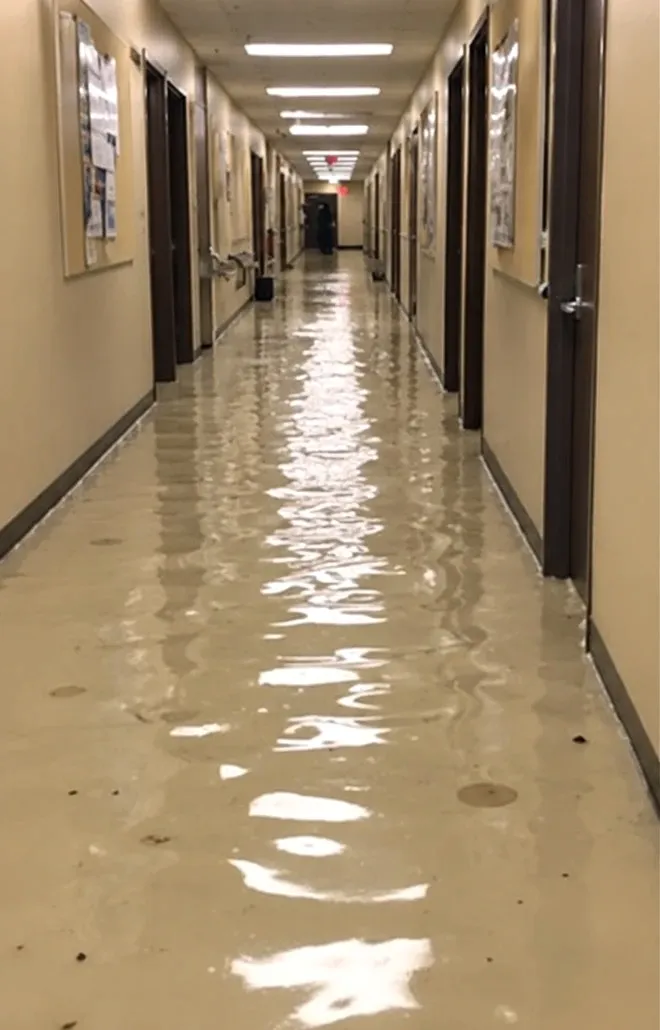
Water damage restoration follows five steps: find the source, remove standing water, measure moisture, dry the structure, then repair.
Find the source
The water has to stop before drying can work. A plumber fixes a broken pipe. A roofer fixes a roof leak.
Remove standing water
Pumps and extractors pull water off the floor and out of carpet. Soaked items get moved out of the way.
Measure moisture
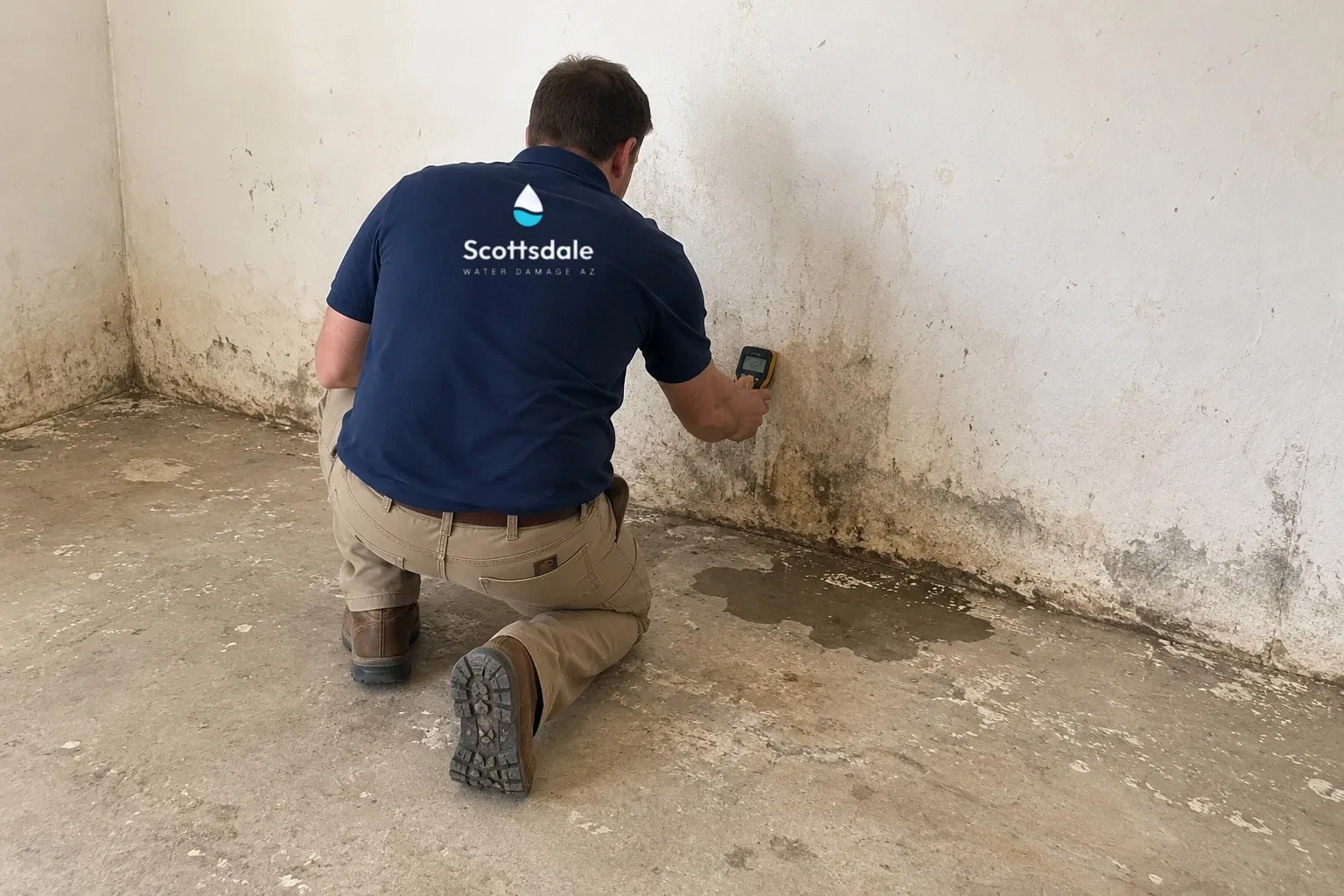
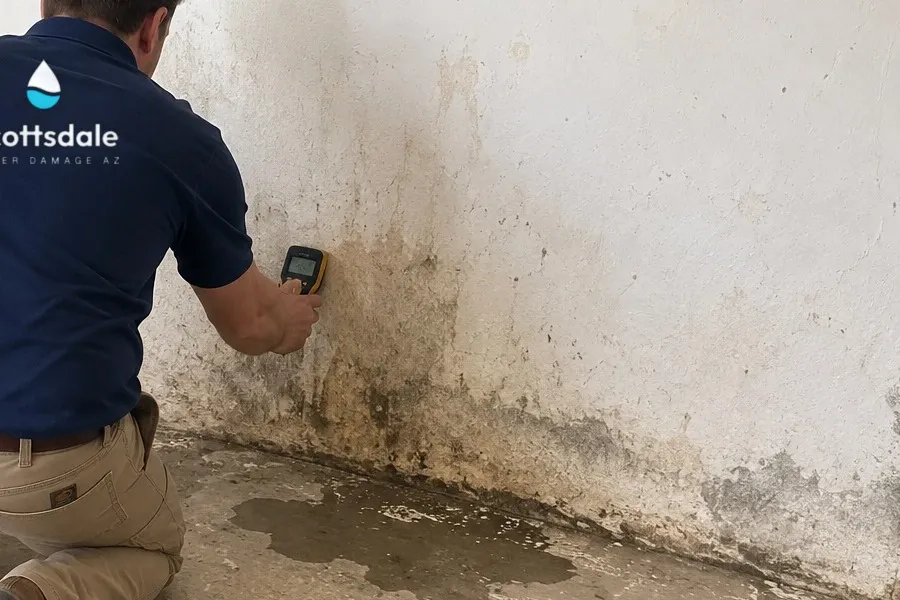
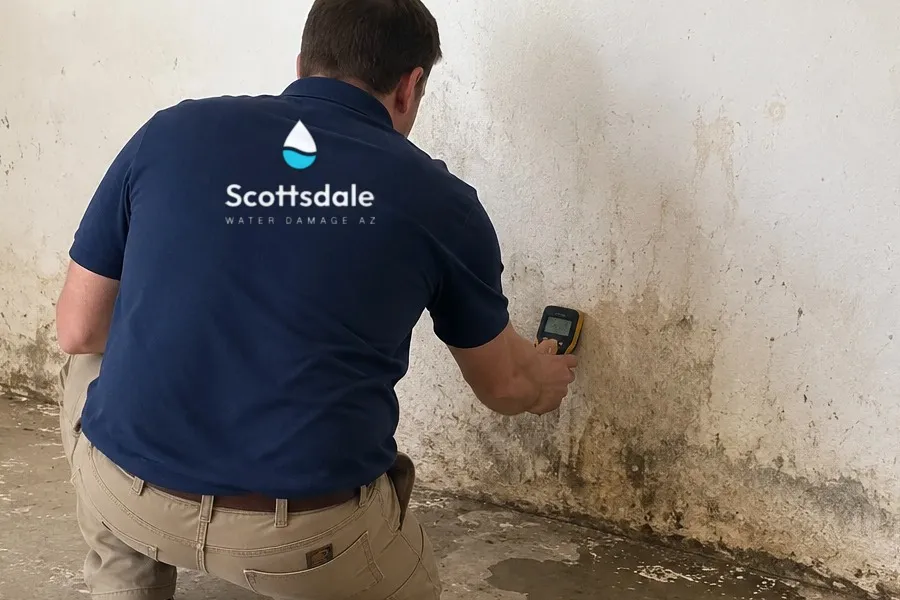
A moisture meter shows how wet a wall, floor or cabinet is, even when it looks dry. Mapping these readings room by room is called moisture mapping.
Dry the structure
Air movers (strong fans) and dehumidifiers dry the walls, floors and air. Sometimes wet drywall is cut open so the space behind it can dry.
Repair
Once the readings show dry, damaged drywall, flooring and trim get repaired or replaced. This is the restoration part.
What causes water damage in Scottsdale homes?
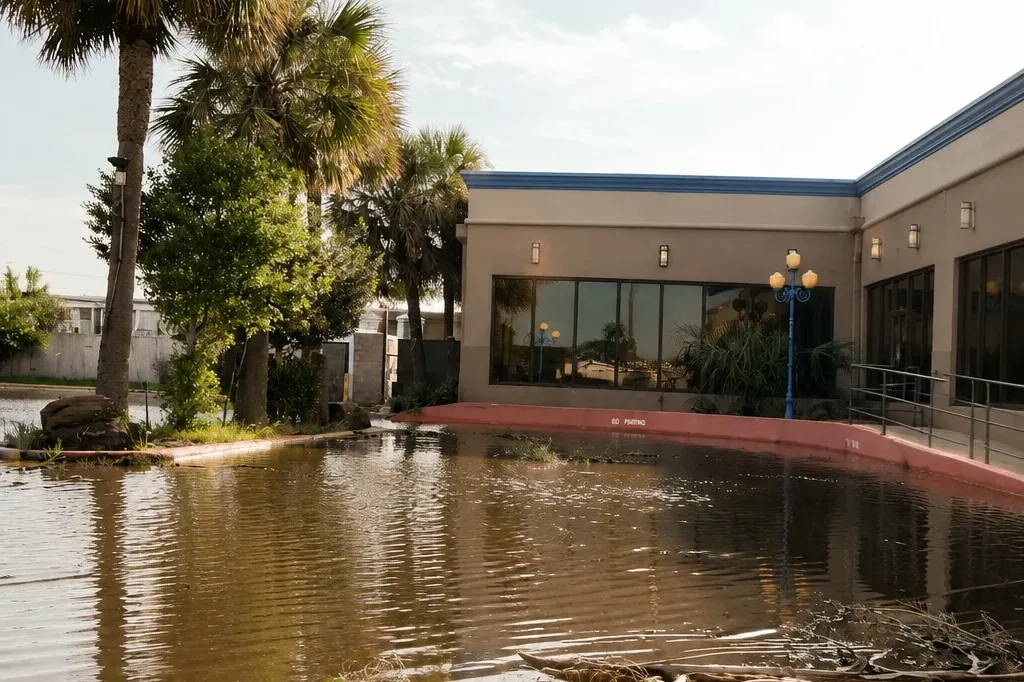
Water damage in Scottsdale homes can start with plumbing, appliances, the AC or the weather. Dripping from above? Read what to do about a ceiling leak.
Supply lines and hoses
Supply lines feed your washer, toilet and fridge under constant pressure. IBHS, an insurance research group, found a burst supply line caused half of washing machine water damage incidents. It says washer makers recommend new hoses every 5 years.
Water heaters and hard water
An IBHS study found the risk of a water heater leak or burst rises sharply at 5 years. It also says sediment builds faster with hard water. City of Scottsdale water is very hard by USGS standards.
Slab leaks and desert soil
A slab leak is a leak in a pipe under the concrete floor. The Arizona Geological Survey says problem soils can crack floor slabs and rupture pipelines. The City of Scottsdale's free WaterSmart portal sends leak alerts to customers with hourly water use.
AC drain lines
Phoenix averages 111 days a year at or above 100 degrees, per the National Weather Service. An EPA home cooling checklist says a plugged AC drain line can cause water damage in the house.
Monsoon roof leaks
The National Weather Service dates monsoon season from June 15 to September 30. It lists flash floods and microbursts among common monsoon hazards. Rain that gets past the roof can show up as a stain or a drip in the ceiling.
Rare winter freezes
Phoenix averages 1 day a year at or below 32 degrees, per the National Weather Service. When a freeze warning comes, IBHS suggests disconnecting garden hoses and turning off outside faucets.
Water damage services in Scottsdale
Pick the page that matches what happened. Each one explains the local causes and how the cleanup works.
- Burst pipe & slab leakBurst pipe, slab leak or leaking water heater: what to do first and who to call.
- Ceiling water damageA stain, drip or sagging spot in your ceiling from rain, an AC clog or a pipe leak.
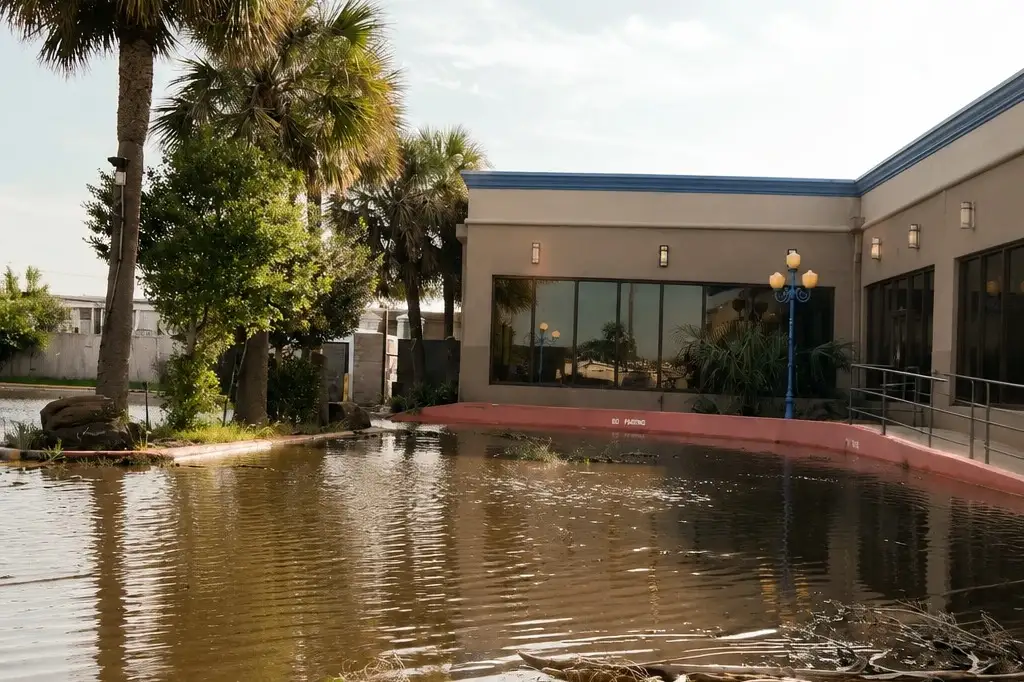
- Flood cleanupFor monsoon rain or a flash flood that pushed water into your home from outside.
- Sewage cleanupA drain backup or a toilet overflow brought sewage into your home.
 Mold remediationFor mold or a musty smell after a leak, an AC drain backup or a monsoon storm.
Water damage in Scottsdale? Call now
Burst pipes, slab leaks, ceiling leaks, flooding, sewage backups and mold.
How much does water damage restoration cost in Scottsdale?
There is no single price. Water damage restoration cost in Scottsdale depends on how much got wet, the type of water and what needs rebuilding.
What drives the cost:
- Water category. This means how dirty the water is. Clean water from a supply line is Category 1, the cleanest. For dirty water, the restoration industry's standards body says cleaning should come before drying.
- How much got wet. More square feet means more equipment and more drying time.
- How long it sat. Water soaks deeper the longer it stays. The same standards body says time and temperature can change a water's category.
- Materials. Tile, wood, carpet, drywall and cabinets each dry differently. Some have to come out.
- Mold. If mold has grown, it adds work. The EPA says it is not enough to kill mold: it must be removed.
- Rebuild. Replacing drywall, flooring or cabinets adds to the cost.
For national context, the Insurance Information Institute says water damage and freezing claims averaged $15,400 from 2019 to 2023. That is an insurance claim average, not a price for your home.
Ask about pricing when you call.
Does homeowners insurance cover water damage?
It depends on your policy and on where the water came from. Your insurance company decides what your policy covers, and your adjuster can explain it.
What the Insurance Information Institute (Triple-I) and FEMA say:
- Water from inside your plumbing. Triple-I lists accidental discharge or overflow of water from a plumbing system among covered perils. A peril is a cause of damage that a policy names. Your policy wording decides.
- Flood. Triple-I says flood damage is excluded under standard homeowners and renters policies. FEMA's FloodSmart program says most homeowners policies do not cover flood damage.
- Sewer backup. Triple-I says sewer backups are not covered under a typical homeowners policy, nor by flood insurance.
- Neglect and mold. Triple-I says policies do not cover damage due to lack of maintenance, mold or infestation.
Call your insurer or agent to report the damage and ask what your policy covers. No one can promise what your insurer will pay. Be careful with anyone who does.
The full guide goes through burst pipes, slab leaks and sewer backups: does homeowners insurance cover water damage.
How to choose a water damage restoration company
Check the contractor's license with the Arizona Registrar of Contractors. Then ask for a written scope before work starts, and for daily moisture readings while the house dries.
A short checklist before you let anyone start:
- Ask for the ROC number. Arizona law (A.R.S. 32-1124) says contractors must show their ROC number on ads and written bids. ROC is the Arizona Registrar of Contractors, the state office for contractor licenses.
- Check the license. You can check any contractor's license with the Arizona Registrar of Contractors.
- Ask for a written scope. A scope is the list of work, room by room. Get it in writing.
- Ask for daily moisture readings. They show whether the house is drying. They also give you a record to share with your insurer.
- Read the work authorization before you sign. This form lets work begin. Read what it says about payment and about your insurance claim.
This is general advice for any homeowner hiring help.
Water damage help near Scottsdale
This site has pages for North Scottsdale and four nearby towns: Paradise Valley, Fountain Hills, Cave Creek and Carefree. Each page covers who to call first and the local water risks.
- Paradise ValleyAbout 4.4 miles from Scottsdale City Hall, with four water providers and many properties on septic.
- North ScottsdaleDC Ranch and Pinnacle Peak Park, about 16 to 21 miles from Scottsdale City Hall.
- Fountain HillsAbout 21 miles from Scottsdale City Hall. 58% of homes here were built from 1980 to 1999.
- Cave CreekFounded in 1870 as a mining and ranching community, about 29 miles from Scottsdale City Hall.
- CarefreeEasy Street and Ho Hum Road, about 27 miles from Scottsdale City Hall.
Water damage questions Scottsdale homeowners ask
What does water damage restoration include?
It follows five steps. Find and stop the source, remove standing water, measure moisture, dry the structure, then repair what was damaged. Moisture readings show when drying is done.
How long does water damage restoration take?
It depends on how much got wet, the materials and how dirty the water was. Drying should start right away. The EPA says to dry water-damaged areas and items within 24 to 48 hours to prevent mold growth. Repairs come after the drying.
How much does water damage restoration cost?
It depends on how much got wet, how dirty the water was and how long it sat. Mold and rebuilding add cost. For context, the Insurance Information Institute says water damage and freezing claims averaged $15,400 from 2019 to 2023. That is a national insurance claim average, not a quote. Ask about pricing when you call.
Does insurance pay for water restoration?
Your insurer decides, based on your policy. Triple-I lists accidental discharge or overflow of water from a plumbing system among covered perils. A peril is a cause of damage that a policy names. It also says flood damage is excluded from standard homeowners policies. Sewer backups are not covered by a typical policy either. More in is water damage covered by homeowners insurance.
What is the difference between water damage mitigation and restoration?
Mitigation stops the water and dries the structure, so the damage does not spread. Restoration repairs and rebuilds what was damaged, like drywall, flooring and cabinets.
How do I choose a water damage restoration company?
Ask for the company's ROC number. Arizona law (A.R.S. 32-1124) says contractors must show it on ads and written bids. Check the license with the Arizona Registrar of Contractors. Then ask for a written scope and daily moisture readings. Read the work authorization before you sign.
Can I dry out water damage myself?
A small spill of clean water on a hard floor, yes: mop it up and dry the area. Water inside walls, under flooring or in carpet pad is harder to find and harder to dry. For sewage or other contaminated water, the EPA says to call a professional experienced with that type of damage.
What do Category 1, 2 and 3 water mean?
The category tells you how dirty the water is. Category 1 is clean water, like a broken supply line. Category 2 has significant contamination, like a washer or dishwasher overflow. Category 3 is the dirtiest: the industry's S500 standard calls it grossly contaminated, with sewage and rising water from rivers or streams as examples. See sewage cleanup and flood cleanup for those cases.
Does water damage get worse if you wait?
It can. Water keeps soaking into drywall, wood and insulation. The restoration industry's standards body says time and temperature can change a water's category. Mold is the other risk, so drying should start as soon as the leak stops.